Tag: events

  • Sus AI Futures Spring / Summer Activities 2026

    While enjoying the ominous heatwaves, we’ve also been keeping busy.

    In March, BRAID Sus AI Futures artist-in-residence Yasmine Boudiaf led an extraordinary interactive arts workshop exploring techno-ritual and collective image-making with generative AI.

    Digital & Data Futures: Participatory AI – Drawing a Collective Dataset

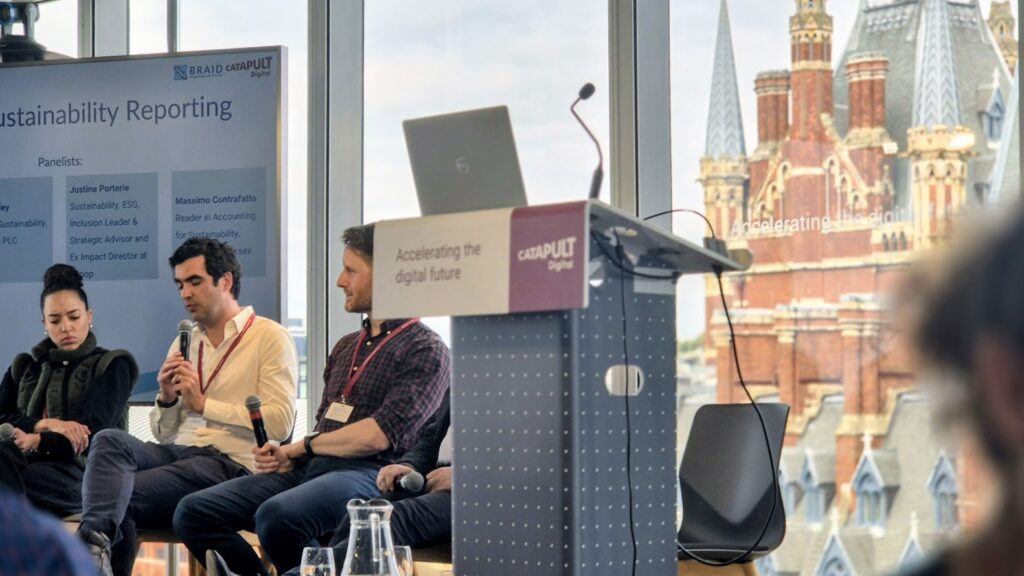
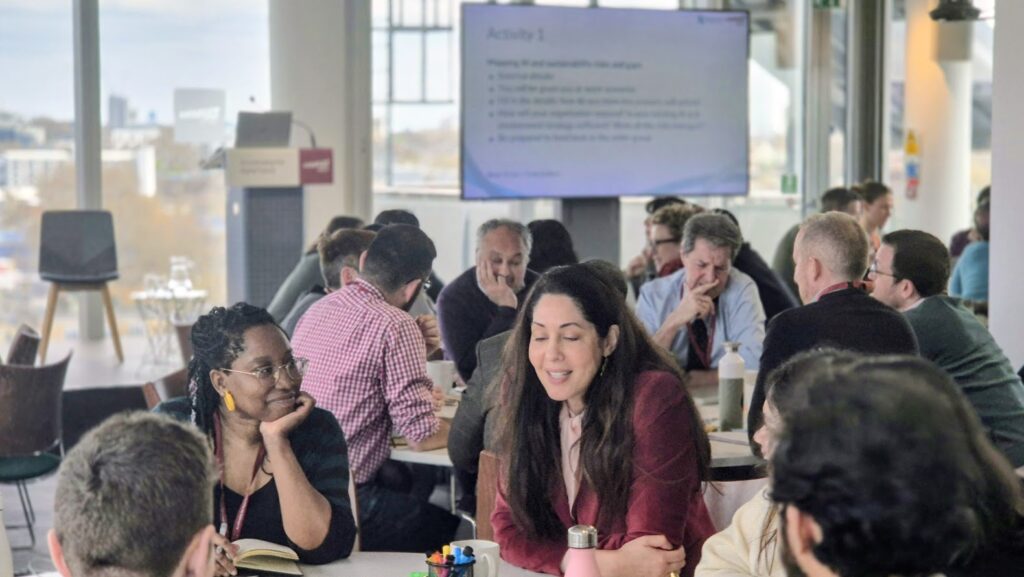
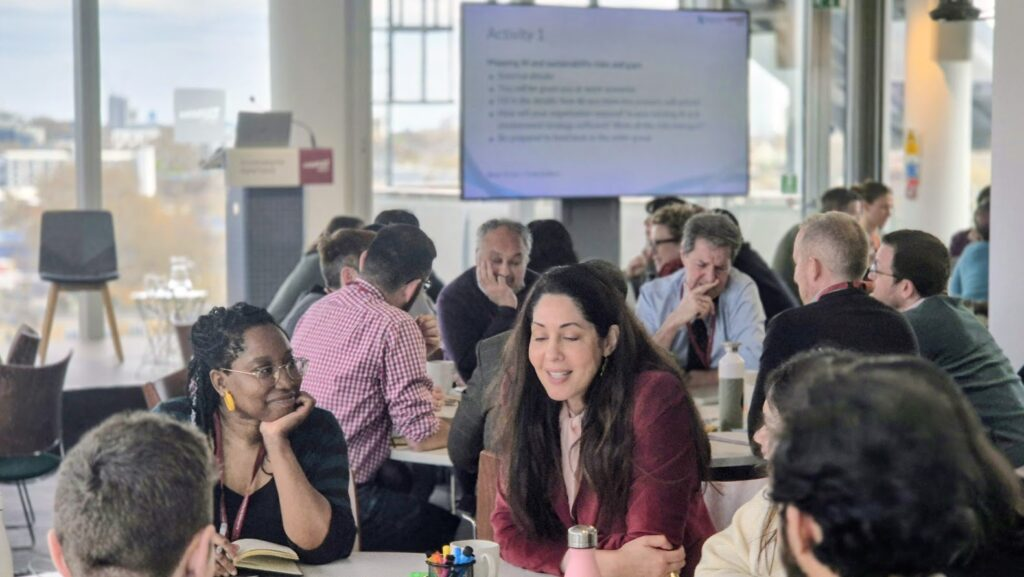
    April began with AI and the Future of Sustainability Reporting with Digital Catapult.
    Digital Catapult, London

    Also in April, we delivered a talk and play-based workshop on ‘Beyond Responsible AI’ at Amazon’s Earth Day summit at Amazon HQ in London, streamed to the staff globally.
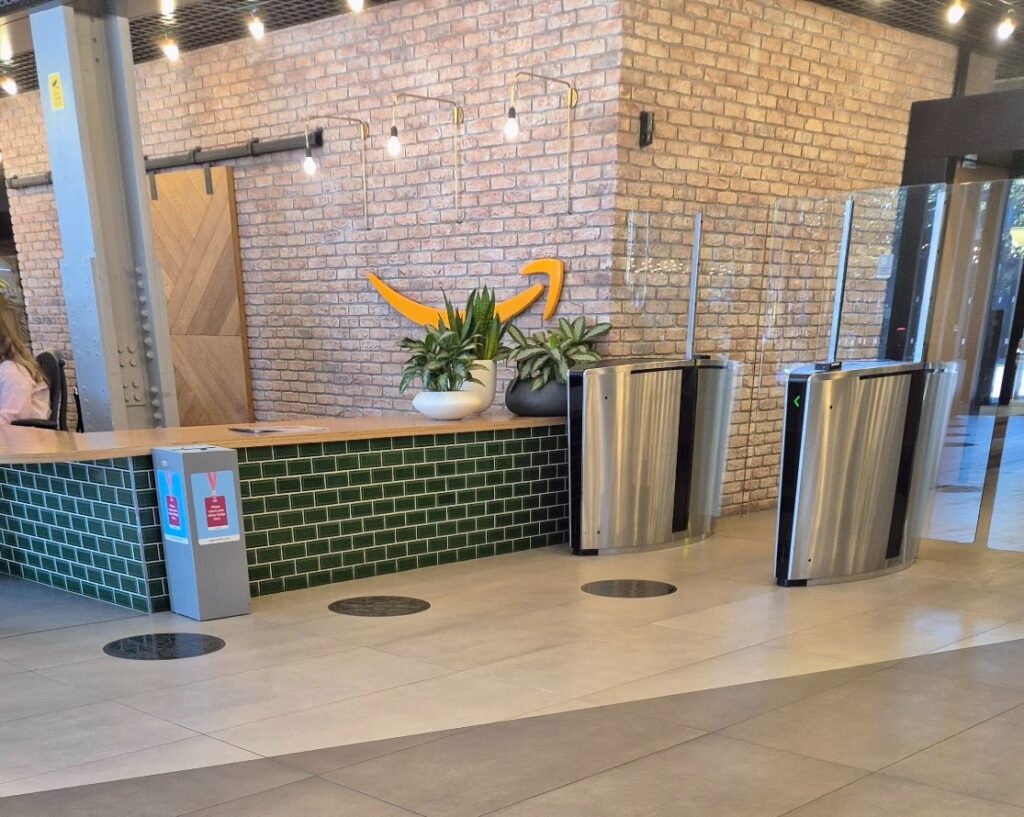
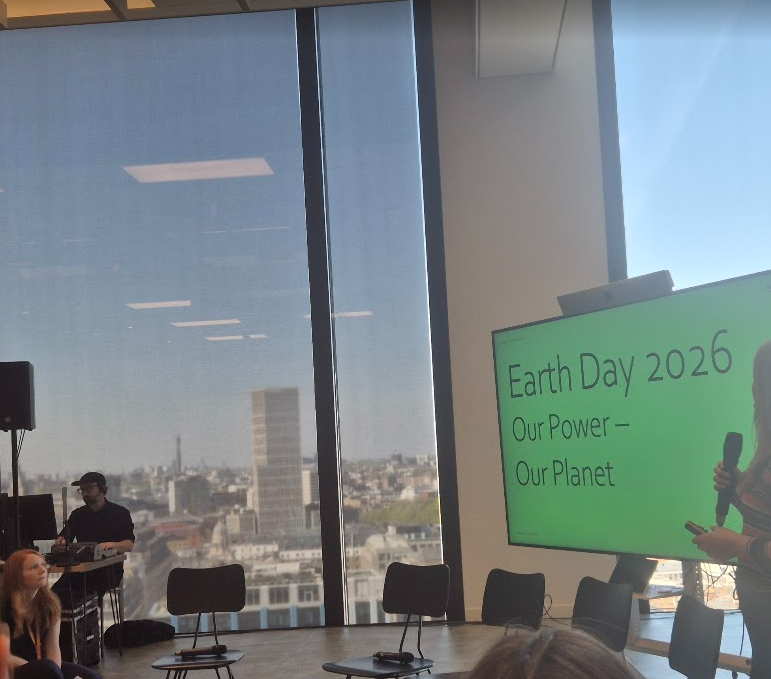
    Amazon offices in London
    Tech check

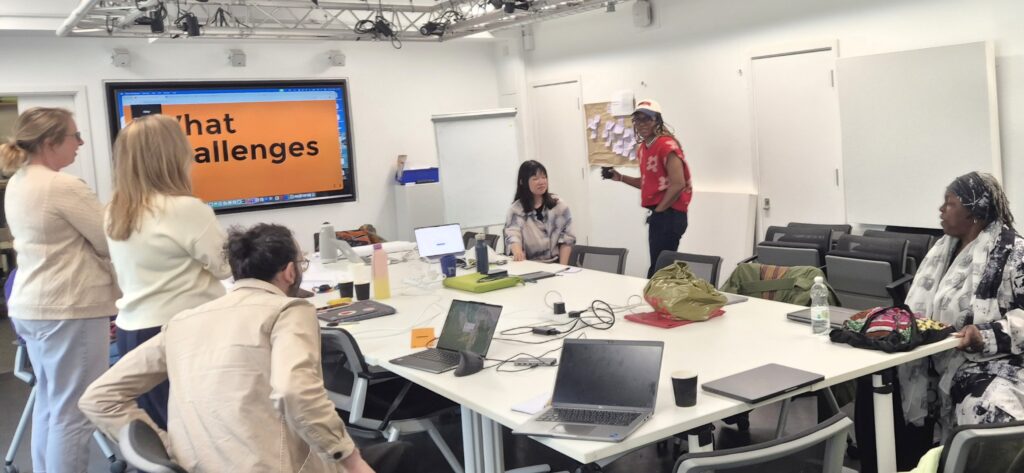
    In May, project partner AfroFutures_UK ran a hugely inspiring design jam session at the Sussex Digital Humanities Lab, supporting participants to think through alternative AI futures. 

    Sussex Digital Humanities Lab

    This was a participatory hackathon exploring what community-oriented AI infrastructure could look like. Drawing on African and Afrofuturist thought, transfeminist futurology and CripTech, participants developed ideas around regenerative energy systems, reparative design requirements, and DIY hardware built from repurposed technology.

    Sompting

    Insights from Sus AI Futures are feeding into the BA-funded public engagement project Farming Futures: Global Imaginaries, which is developing serious play activities to connect the past, present, and future of farming.

    Some recent research suggests that AI is poised to completely revolutionize what we eat and how we grow or produce it. How credible are these claims? 

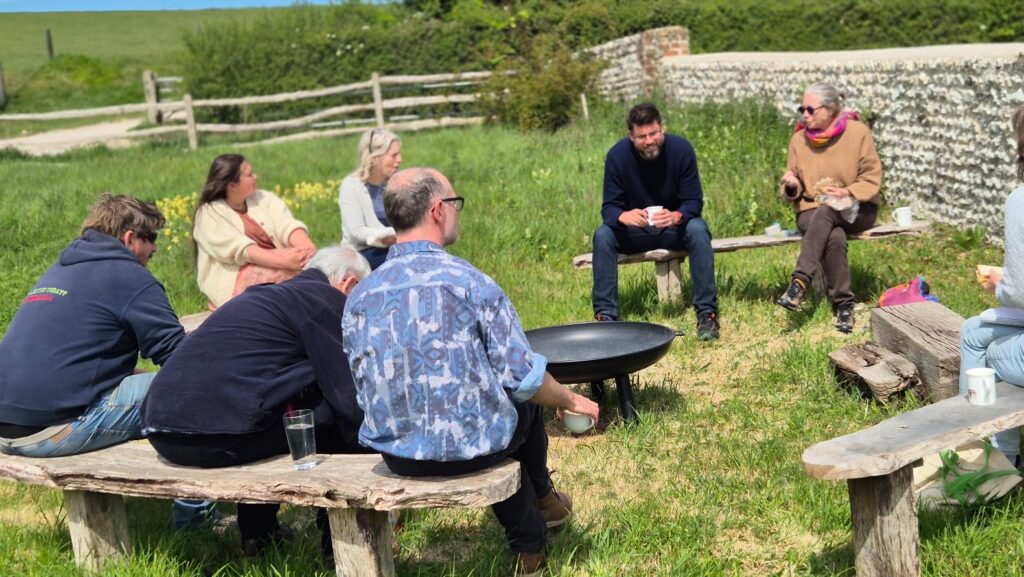
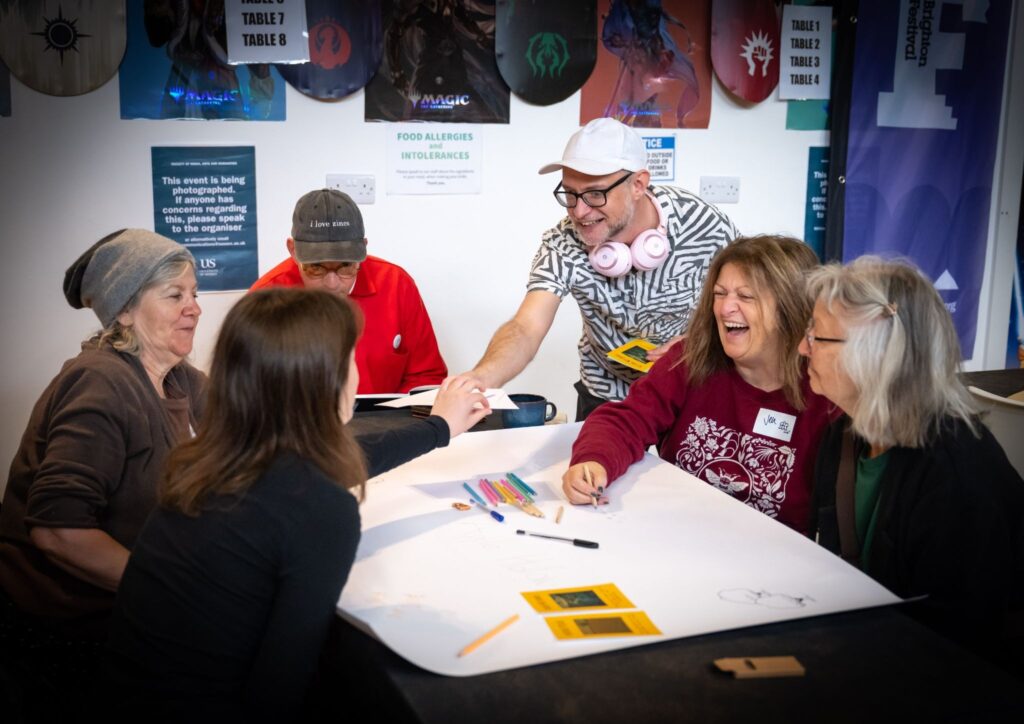
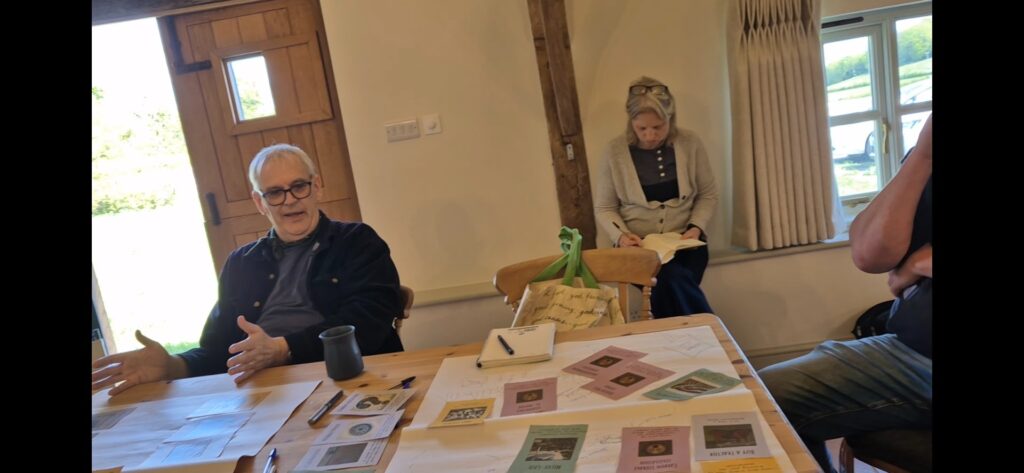
    Also in May, we had the opportunity to consult with farmers on Sompting Estate in the heart of the Sussex Downs, between Worthing and Steyning, and to engage with the public as part of the Brighton Festival, hosted by the Dice Saloon in Brighton.

    The verdict on the AI tractors? More of a US thing, for now at least.

    Sompting
    Jo and Dan with participants at the Dice Saloon for Brighton Festival
    Perpetua frantically scribbling down MIke’s words of wisdom

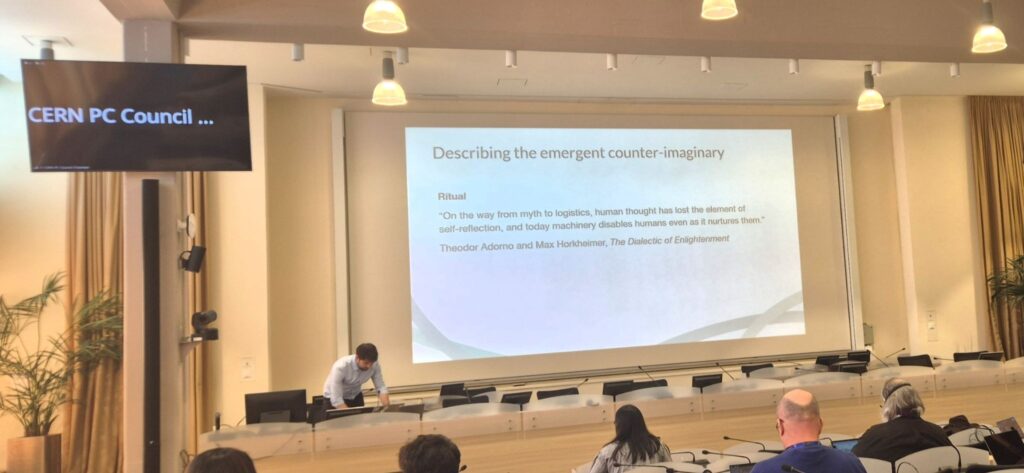
    It was also a great privilege and a lot of fun to give one of the keynotes at SC4RC in Switzerland—and a wonderful opportunity to reach a more technical and STEMmy audience. Congratulations to the organisers for putting together such an inspiring interdisciplinary conference.

    Not sure what this was about
    Stern at CERN: the Adorno and Horkheimer slide that sparked extremely lively debate

    In July, Sus AI Futures also contributed to the Culture for Climate Scotland series of lunchtime sessions. 

    Nathalia Henao’s visualization of initial results from the data sprint

    Also in July we dropped in on the Amsterdam Digital Methods Summer School, and brought an AI and climate spin to Gavin Mueller’s data sprint. Read more about it here (and see some topic modelling results here).

    Fieke at the Critical Infrastructure Lab with a clay-based PCB
    Critical Infrastructure Lab

    Project partner Critical Infrastructure Lab (UvA) are continuing their incredible work into (among many other things) building a prototype organic data centre. We were able to get together to check out progress to date, and to discuss many other matters, including Felipe Silva Figueiredo’s recent research into Iceland’s pivot from crypto mining rigs to AI data centres. Critical Infrastructure Lab will be hosting a Sus AI Futures workshop in September specifically focused on energy infrastructures.

    Binnetpret
    Binnepret

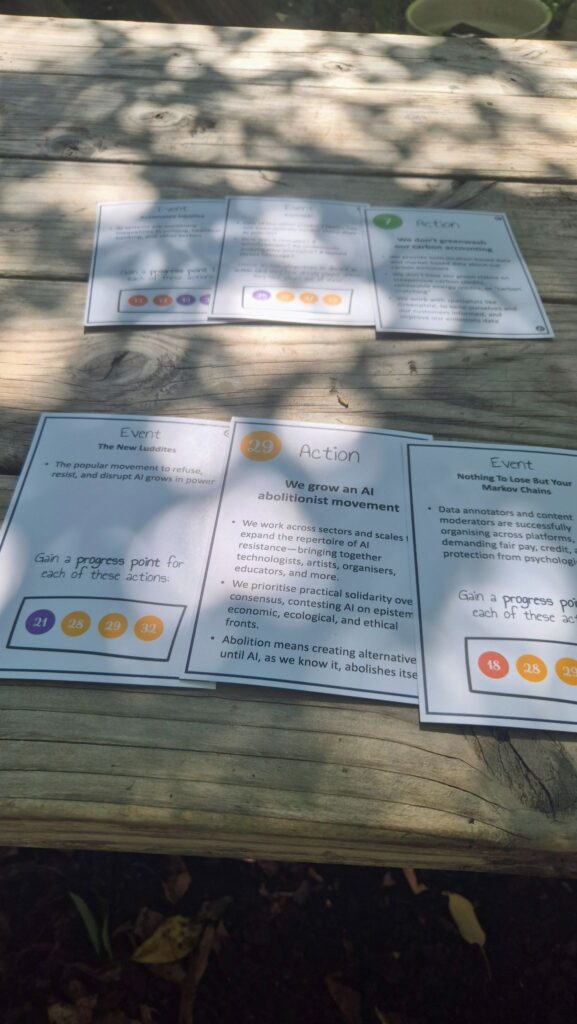
    More recently, with Lucy Freedman (People’s Palace Projects), we have been exploring the intersection of AI, climate, and the criminal justice system, and playtesting a new iteration of the Beyond Responsible AI game at De Binnenpret in Amsterdam.

    And behind the scenes, we’ve also been working on a variety of publications and resources. Here’s just three: Green Coding Solutions are making great progress with their Green AI Model; the first drafts are rolling in for our special issue, Resisting the Infrastructuralization of AI; (with project collaborators Applied African Speculative Fiction), the first volume of the Applied African Speculative Fiction toolkit, coming from Ping Press very soon.

  • AfroFutures_UK radical infrastructure workshop

    Project partner AfroFutures_UK ran a hugely inspiring design jam session at the Sussex Digital Humanities Lab, supporting participants to think through alternative AI futures.
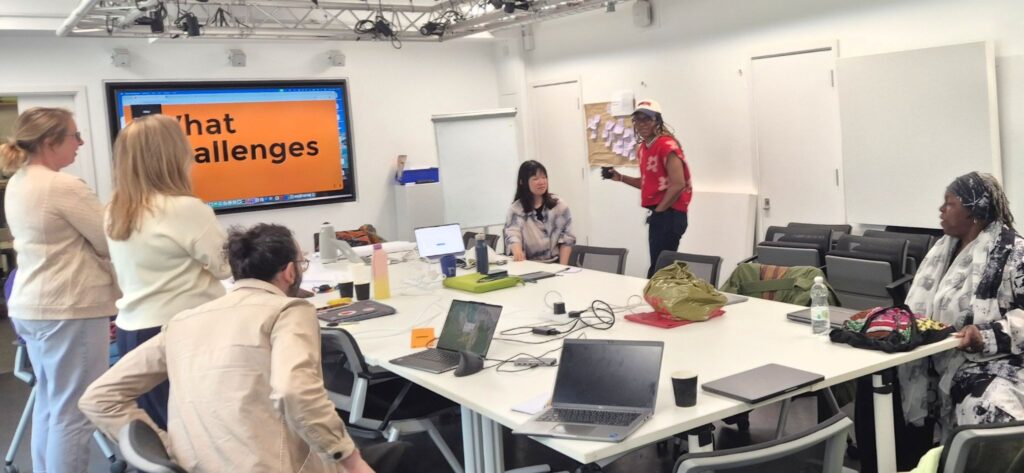
    This was a participatory hackathon exploring what community-oriented AI infrastructure could look like. Drawing on African and Afrofuturist thought, transfeminist futurology and CripTech, participants developed ideas around regenerative energy systems, reparative design requirements, and DIY hardware built from repurposed technology.

    Huge thanks to Florence, Nikky, Olu, and Charlotte from AfroFutures_UK. Watch this space for more documentation and outputs.

  • AI and the Future of Sustainability Reporting

    DC x Sus AI Futures: AI and the Future of Sustainability Reporting

    In early April, Sustainable AI Futures and Digital Catapult hosted a workshop day in London on AI and the future of sustainability reporting

    Around fifty participants across industry, academia, and policy gathered to explore the challenges of reporting on the sustainability of AI, as well as the increasing use of AI within sustainability reporting. Speakers, panellists, and session facilitators included Chanell Daniels, Jo Lindsay Walton, Melissa Gregg, Oliver Cronk, Loïc Lannelongue, Massimo Contrafatto, Jamie Riley, Justine Porterie, Alexis Normand, and Shane Brownie. Slides from the keynote and some of the activities are available here.

    A couple snapshots: It was a truly interdisciplinary, multi-professional crowd, and very exciting to hear the joyful and occasionally enraged buzz in the room, as teams thought through possible future scenarios for AI and climate, and roleplayed their imaginary start-ups through the perils, pitfalls, and possibilities of the years ahead.

    It was also a real pleasure to hear sustainability professionals chatting about the impact of AI on the future of their role. One view was: Yes, AI is coming for our jobs, but that is okay! Sustainability teams were never meant to be so large in the first place. If you’re in sustainability and you want to continue with somewhat similar work in the future, stick close with finance and compliance functions.

    What about the use of AI within sustainability reporting? It is clear that, despite many important initiatives of convergence and alignment, the typical sustainability professional still faces a dizzying array of standards, frameworks, and reporting requirements.

    A huge amount of sustainability teams’ time is taken up with data collection and reporting, while ideas for driving change get de-prioritized. A substantial amount of sustainability teams’ time is consumed by locating data, cleaning it, reconciling incompatible formats and translating it into the categories required by different reporting regimes. 

    There appears to be a use case for AI here, helping sustainability teams to process messy and fragmented data sources, map information onto reporting requirements, detect anomalies, and monitor changing regulations and standards. When reporting workloads are high, more ambitious ideas for organisational change can easily be deprioritised. 

    But even setting aside the environmental impacts of these platforms themselves, there are some big questions. GenAI appears to be a big part of the story, so naturally users are concerned about hallucination, interpretability, and accountability. Sustainability platforms are seldom transparent enough about how they are leveraging AI in their products.

    When an LLM needs to draw on a data source under the developer’s control, the most widely used approach is retrieval-augmented generation, or RAG. Relevant material (probably relevant) is taken from a pre-prepared corpus and inserted into the model’s context window before it produces an answer. Retrieval is usually based on embeddings, so it can identify semantically related passages rather than relying only on exact keyword matches.

    RAG can improve the relevance and evidential basis of outputs, but it does not remove the non-deterministic core of generative AI. The model may still ignore, misread, distort or embellish the retrieved material, and the quality of the result depends on how sources are selected, parsed, divided, indexed, ranked and presented, among other factors.

    Crucially, RAG is often misunderstood. We have repeatedly heard it described as a form of AI that “only looks up answers in the data you give it.” But RAG does not replace generation with lookup. It retrieves material and supplies it to a generative model, which still interprets, combines and reformulates that material probabilistically. The model draws on patterns learned during training—the big, expensive training on the huge datasets scraped from the internet—rather than relying exclusively on the retrieved sources.

    Research into more grounded AI systems is developing quickly. . You can equip AI with deterministic tools, you can turn down the temperature to reduce the unpredictability of outputs, you can have LLMs devoted to double-checking the outputs of LLMs.  There are a great variety of RAG methods out there, all with their strengths and weaknesses. All this means it’s all the more important that any company providing AI-powered sustainability management and reporting services is transparent about which methods, if any, they are using, and how. Sharing technical detail is the only credible and ethical approach–this applies to AI across many different spaces, but sustainability reporting should certainly be leading the way.

    Sustainability reporting often is a messy, approximate art, where you make do with the data you have, and prioritize moving in the right direction, rather than obsessing over measuring everything perfectly. There is a risk that this is used to justify AI-powered bodges and fudges which feel similar (“Well, humans have to make stuff up too sometimes”), but may be far more pernicious. AI offers black boxes and dilutes accountability. Its estimates, workarounds, proxies, and mistakes are not the same as human estimates, workarounds, proxies, and mistakes.

    Any use of AI within sustainability reporting needs strong controls: deterministic checks, structured and traceable lineages that provide explicit links between claims and inputted evidence, clearly defined abstention or escalation rules, tools to enable human review where necessary. Above all, providers of AI-powered sustainability solutions need to be much more open about how these systems work. Methods should be presented as auditable technical documentation, not marketing copy.

    And a final signal boost: research into existing climate-related reporting is underway, and DBT is interested in the experiences of companies and investors. Get in touch with climatefinresearch@iffresearch.com

    Some of the insights from the day will be collected in a short publication, RAI x ESG Compass. If you’re interested in contributing, or being involved in some other way, get in touch.

  • Symposium: The Politics of AI: Governance, Resistance, Alternatives

    On 18th September 2025 the symposium ‘The Politics of AI: Governance, Resistance, Alternatives’ will take place at Goldsmiths, University of London. You can still register for the symposium here. The symposium is part of the BRAID project Sustainable AI Futures, which is mobilising interdisciplinary perspectives on AI and the environment, including the social life of AI environmental governance tools.

    Getting there:

    Goldsmiths is near New Cross and New Cross Gate stations. More details here. The day will open in RHB300A (note the ‘A’!). Turn right when coming into the front entrance of the building and go up the stairs. Note that all rooms can be found via the room finder: https://www.gold.ac.uk/campus-map/rhb-room-finder/ .

    About the symposium

    The rapid expansion of AI and computational infrastructure raises critical questions on whether we are governing AI responsibly, and if that is even possible at all. Contemporary governance regimes reduce social and environmental impacts to mere issues of quantification of harms and management of resources. Even if we track down an elusive number for its carbon emissions or water usage, how can we reconcile that with AI’s complex, messy and highly uncertain social impacts? What are AI’s sociopolitical effects, and how do we begin to notice, imagine, manage, or measure these effects? 

    This symposium bring together researchers who question AI’s implications for sustainability, public interest technology, and economic justice across multiple disciplines. The talks will critically engage with concepts like responsible AI, sustainable AI, and AI governance, and present alternative visions to the current AI entanglements with green capitalism and the twin transition, austerity, war, and accelerationism?

    Programme: ‘The Politics of AI: Governance, Resistance, Alternatives’

    You can find the latest version of the programme at You will find a live programme at https://tinyurl.com/the-politics-of-ai 

    Lunch suggestions

    There will be coffee and tea provided throughout the day. For lunch, we suggest: